
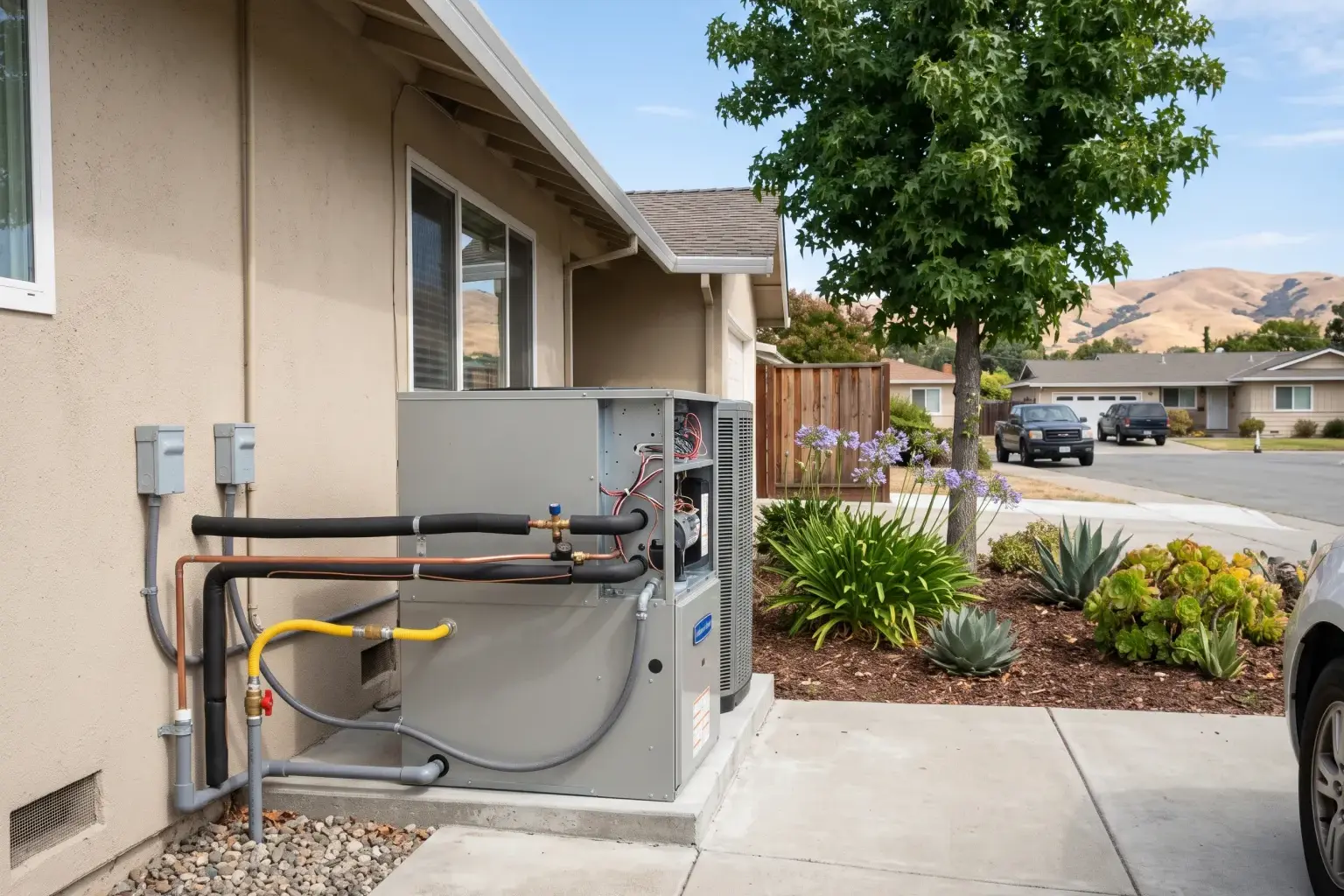
The short answer
If your furnace or heat pump won't start, cycles on and off, makes new noises, or leaves rooms cold, it's time for a diagnostic visit. We find the cause, explain your repair and replacement options in plain terms, and get your approval before doing any work.
Fremont winters are mild, but a cold, damp night is still uncomfortable when the furnace won't start or the heat pump blows lukewarm air. ClimateEdge HVAC Service repairs gas furnaces, heat pumps, and ducted heating systems for homeowners in Fremont, Newark, Union City, Milpitas, and nearby communities. This page explains the signs that your system needs attention, what our technicians check, how we think about repair versus replacement under current Bay Area rules, what affects the cost of a repair, and what to expect from a service visit.
Signs Your Heating System Needs Repair
Many heating problems start small and get worse over a few weeks. Calling early often means a simpler fix and less risk of a breakdown on the coldest night of the year. Watch for these warning signs:
- The system doesn't turn on, or the blower runs but the air stays cool
- Short cycling: the heat starts and stops every few minutes
- Some rooms are warm while others stay cold
- Banging, squealing, grinding, or rattling sounds that weren't there before
- A burning or dusty smell that doesn't clear after the first few minutes of the season
- A gas smell. Leave the house and call your gas utility first, then call us
- A heat pump that ices over and doesn't defrost, or runs constantly without keeping up
- Energy bills rising even though your thermostat settings haven't changed
- A thermostat that doesn't respond, or a display that shows error codes
What We Check During a Heating Repair Visit
A good repair starts with a full diagnosis. Replacing a part without finding out why it failed often brings the same problem back. Our technicians work through the whole system, not only the part that seems broken.
For gas furnaces, we check the ignition system and flame sensor, burners, gas pressure, heat exchanger condition, inducer motor, pressure switches, limit switches, and venting. For heat pumps, we look at refrigerant pressures, the reversing valve, defrost controls, outdoor coil and fan, and the backup heat strips if your system has them. On every system, we check:
- Thermostat operation, settings, and wiring
- Air filter condition and airflow through the system
- Blower motor, capacitor, and belt where applicable
- Electrical connections, fuses, and the control board
- Condensate drain lines on high-efficiency furnaces and heat pumps
- Visible ductwork for disconnected or damaged sections
- Carbon monoxide safety on combustion equipment
Repair or Replace: How We Help You Decide
Most heating problems can be fixed with a repair. A failed igniter, a bad capacitor, a clogged drain line, or a faulty limit switch usually doesn't mean the whole system has reached the end of its life. When a repair makes sense, we'll say so.
Replacement is worth considering when the system has a cracked heat exchanger, when major components fail on older equipment, when repairs keep stacking up, or when the system no longer heats your home evenly. We'll show you what we found and walk you through both options so you can decide.
Bay Area rules matter here too. The Bay Area Air District's appliance rules do not require you to replace working equipment. They apply only when an existing furnace fails or is replaced. Under the Air District's furnace rule, natural gas furnaces manufactured from 2029 on must meet a zero-NOx standard. In practice, that points homeowners toward heat pumps for furnace replacements after that date. If your furnace is aging, it can help to factor this in now rather than during an emergency.
If you're thinking about a heat pump, note that the federal 25C tax credit only covered qualifying heat pumps placed in service before December 31, 2025. It isn't available for new installations. BayREN and your local clean energy provider may offer heat pump and electrification incentives, but amounts and availability change with each funding cycle. We confirm the current offer before we include it in any quote.
What Affects the Cost of a Heating Repair
Every repair is different, and we won't quote a number until we know what's wrong. These are the main factors that affect the cost:
- The type of system: gas furnace, heat pump, or a dual-fuel setup
- Which part failed and whether it's a common part or brand-specific
- Whether one failure caused damage elsewhere, such as a bad capacitor straining a motor
- How easy the equipment is to reach, such as in an attic, crawlspace, garage, or closet
- The age of the system and whether replacement parts are still easy to get
- Whether refrigerant work is needed on a heat pump
- Whether the visit is scheduled or urgent
How a Heating Repair Visit Works
When you contact us, we'll ask a few questions about your system and what you're noticing, then set up a visit. Simple details help, like whether the blower runs, whether there's a code on the thermostat, and when the problem started.
At your home, the technician asks you to describe the problem, then inspects and tests the system. Before any repair work starts, we explain what we found, what we recommend, and why. You approve the work first. If the needed part is on the truck, we can usually finish the repair on the same visit. If not, we'll tell you what we're ordering and when we expect to return.
After the repair, we test the system through a full heating cycle, check safety controls, and make sure the house is warming the way it should. We'll also point out anything we noticed that could cause trouble later, such as a dirty filter or a worn part, so you can plan ahead. Fremont's dry summers and mild, damp winters mean many systems sit unused for months. Having your system checked early in the fall can catch problems before the first cold snap.
Heating Repair by city
- Heating Repair in NewarkLocal service & repairs
- Heating Repair in Union CityLocal service & repairs
- Heating Repair in HaywardLocal service & repairs
- Heating Repair in East Palo AltoLocal service & repairs
- Heating Repair in Menlo ParkLocal service & repairs
- Heating Repair in MilpitasLocal service & repairs
- Heating Repair in Mountain ViewLocal service & repairs
- Heating Repair in PleasantonLocal service & repairs
- Heating Repair in Redwood CityLocal service & repairs
- Heating Repair in SunnyvaleLocal service & repairs
- Heating Repair in AthertonLocal service & repairs
- Heating Repair in Palo AltoLocal service & repairs