
The short answer
If your home is dusty, stuffy, musty, or makes allergies worse, the cause is often in your HVAC system: a poor filter, dirty coil, leaky ducts, or moisture problems. We inspect the system, explain what we find, and recommend the simplest fix that solves the problem, from filter and duct repairs to upgrades like better filtration or dehumidification.
Indoor air quality problems rarely announce themselves. They show up as dust that comes back a day after you clean, a stuffy bedroom, a musty smell when the system starts, or allergies that ease up when you leave the house. ClimateEdge HVAC Service helps homeowners in Fremont, Newark, Union City, Milpitas, and nearby cities find out what is actually going on with the air inside their homes and fix it at the source. Most of the time, that source is connected to your heating and cooling system: the filter, the ductwork, the blower, the coil, or how air moves from room to room.
Signs Your Home Needs an Indoor Air Quality Check
Your HVAC system moves the air in your home through the same filter and ducts many times a day. When something in that path is dirty, leaking, or undersized, the effects spread to every room. Our local climate plays a part too. Dry summers bring dust and, in some years, wildfire smoke, while mild, damp winters can leave moisture in crawlspaces, attics, and duct runs.
- Dust building up quickly on furniture, vents, and electronics
- A musty or stale smell when the heat or air conditioning turns on
- Allergy or asthma symptoms that are worse at home than elsewhere
- Rooms that feel stuffy, or that stay noticeably warmer or cooler than the rest of the house
- Condensation on windows, or signs of mold around vents and in bathrooms
- Dark streaks or debris around supply registers and return grilles
- Smoke or outdoor odors that linger inside long after the air outside has cleared
- A burning or exhaust-like smell near the furnace. Turn the system off and call for service. If a carbon monoxide alarm sounds, leave the home and call 911.
What We Check During an Indoor Air Quality Visit
We start with the equipment and airflow, because that is where most indoor air problems begin or get worse. We look for causes, not just symptoms, and we show you what we find.
If we see signs that call for specialized testing, such as suspected mold inside walls, we will tell you plainly and explain what that kind of testing involves.
- Air filter type, fit, and condition, including whether air is slipping around the edges of the filter
- Blower wheel, evaporator coil, and drain pan for dirt buildup, standing water, or growth
- Condensate drain line for clogs or slow drainage
- Accessible ductwork for leaks, disconnected sections, crushed runs, and debris
- Return air size and placement, and whether closed rooms have a path for air to get back to the system
- Indoor humidity and how well the system handles moisture
- On gas furnaces, the heat exchanger, venting, and flame for signs of combustion problems
- Exhaust fans in kitchens, bathrooms, and laundry areas that affect moisture and odors
Repair, Upgrade, or Replace: Your Options
Many indoor air quality problems can be fixed without new equipment. A better-fitting filter, a cleaned coil, a cleared drain line, or sealed duct joints can make a noticeable difference. We start with those options when they make sense for your home.
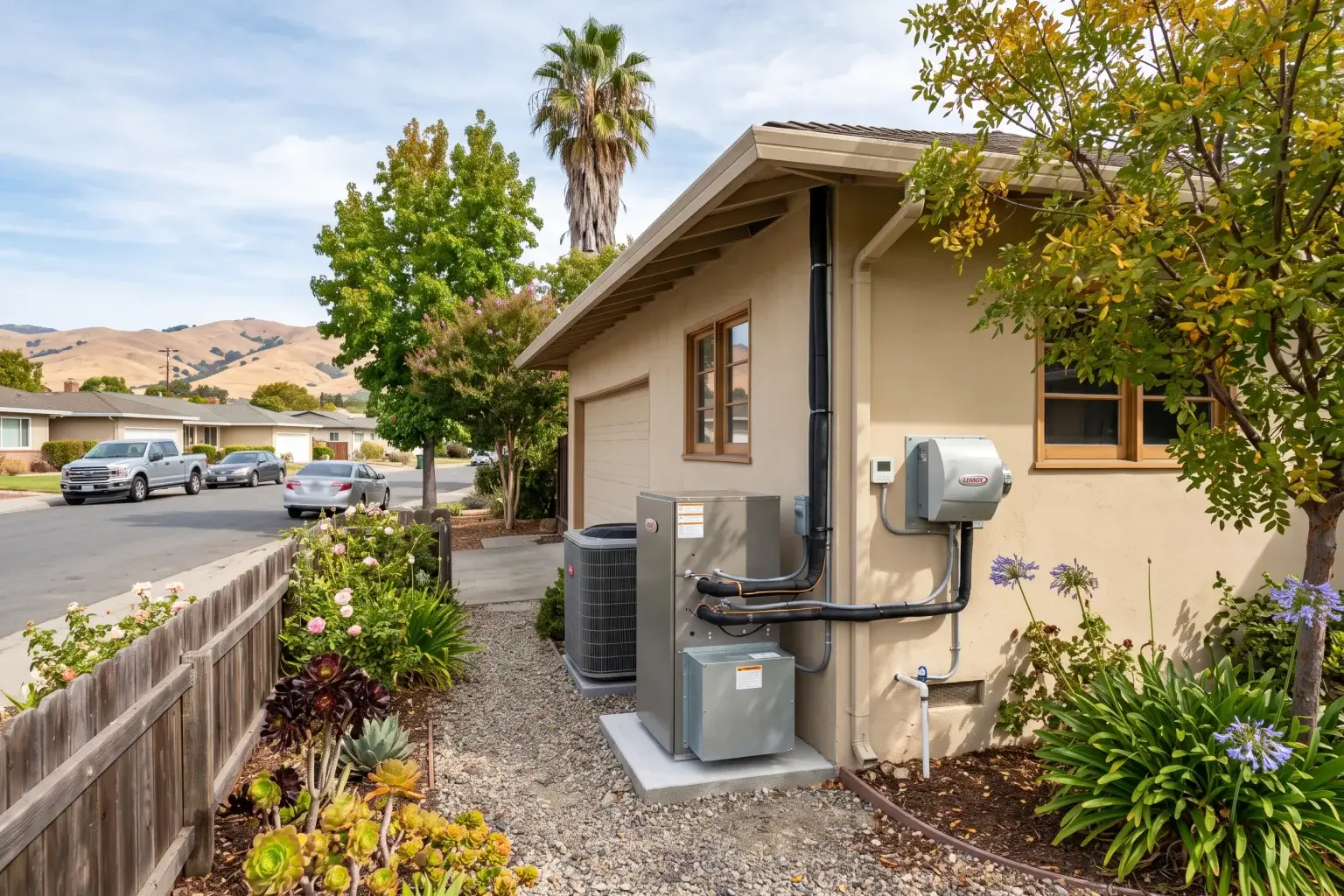
Upgrades are worth considering when the basics are in good shape but the problem continues. Common options include a media filter cabinet that holds a thicker, higher-efficiency filter, a whole-home dehumidifier for damp spaces, fresh-air ventilation for tightly sealed homes, and duct repair or partial replacement where runs are damaged.
Replacing ductwork or equipment comes up when ducts are badly deteriorated or the system itself is failing. If your gas furnace is reaching that point, it helps to know the regional rules. Bay Area Air District appliance rules do not require you to replace working equipment, but gas furnaces manufactured starting in 2029 must meet a zero-NOx standard, which in practice points many homeowners toward heat pumps at replacement time. If you are weighing a heat pump, check BayREN and your local clean energy provider for current incentives. Amounts change by funding cycle, so we confirm the current offer before including it in a quote. The federal 25C tax credit for heat pumps is no longer available for new installations.
What Affects the Cost
We give you a written quote before any work begins. The final cost depends on what we find and which option you choose.
- Whether the fix is maintenance, a repair, an add-on product, or new equipment
- The type of filtration, and whether your system can handle it without restricting airflow
- How much ductwork needs sealing, repair, or replacement, and how easy it is to reach in the attic or crawlspace
- The size of your home and the number of supply and return vents
- The age and condition of your current heating and cooling equipment
- Any electrical, drain, or ventilation work needed to support new equipment
How a Visit Works
When you contact us, we ask what you are noticing, when it started, and whether anyone in the home has allergies or breathing concerns. That helps the technician know where to focus.
At your home, the technician inspects the system and accessible ductwork, checks airflow and humidity, and walks you through the findings, with photos where they help. You will hear what is causing the problem, what we recommend, and what can reasonably wait.
If you approve the work, simple fixes like a filter change or drain line cleaning can often be handled during the same visit. Larger jobs, such as duct repairs or adding equipment, are scheduled for a follow-up. Before we leave, we explain how to keep things working well, including how often to check and change your filter.